Managing inventory is no longer about simply knowing how many products are sitting on a shelf. As businesses grow, stock moves through multiple warehouses, suppliers, sales channels, production stages, and customer orders. Without accurate and timely information, even a small inventory discrepancy can lead to overstocking, stockouts, delayed orders, or unnecessary costs.
An Advanced Inventory Manager helps businesses move beyond spreadsheets and manual tracking by bringing stock visibility, purchasing, sales, warehouse operations, and reporting into a more connected workflow. The objective is simple: maintain the right inventory at the right place and time while keeping unnecessary costs under control.

Why Traditional Stock Control Falls Short
Manual inventory processes often depend on spreadsheets, physical counts, handwritten records, and information shared between different teams. These methods may work for a small operation, but they become difficult to maintain as SKU counts, locations, suppliers, and order volumes increase.
Common challenges include:
Inaccurate stock quantities
Duplicate or outdated inventory records
Delayed purchase decisions
Overstocked slow-moving products
Unexpected stockouts
Difficulty tracking stock across locations
Limited visibility into inventory costs
Time-consuming reporting and reconciliation
The problem is not always a lack of effort. It is often a lack of connected, reliable data. Modern inventory management focuses on continuously tracking inventory movements so managers can make decisions based on current information rather than assumptions.
What Makes an Advanced Inventory Manager Different?
An advanced inventory solution is designed to provide more than basic stock counting. It can connect different inventory activities and provide a clearer picture of what is happening throughout the business.
Key capabilities can include:
Real-Time Stock Visibility
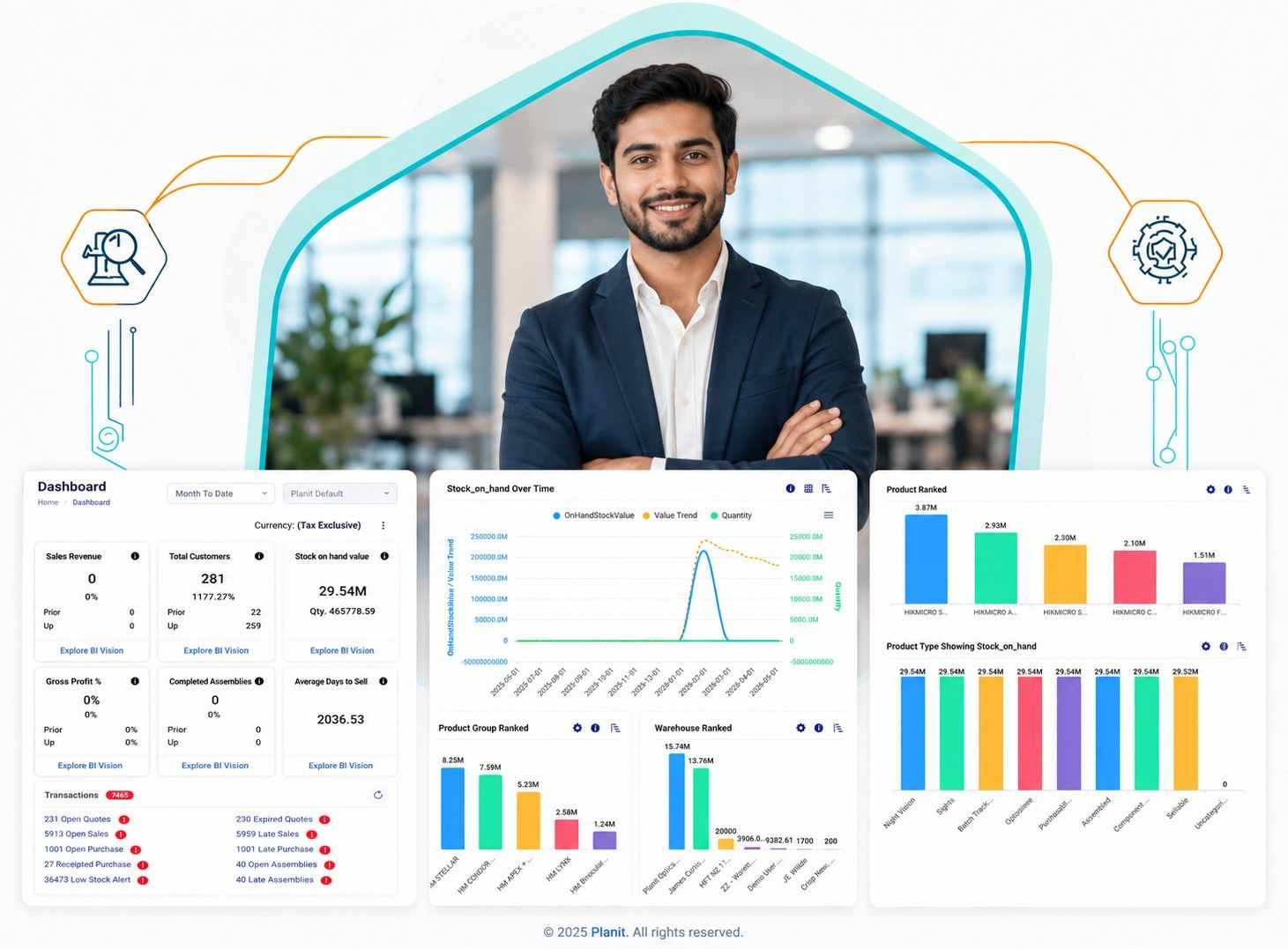
Knowing current stock levels is essential for purchasing, sales, production, and fulfillment. A centralized inventory system can help teams see available, committed, incoming, and transferred stock without relying on multiple disconnected spreadsheets.
This visibility becomes particularly valuable for businesses managing multiple warehouses or locations. Managers can identify where stock is available and make better decisions about replenishment or transfers.
Smarter Reorder Management
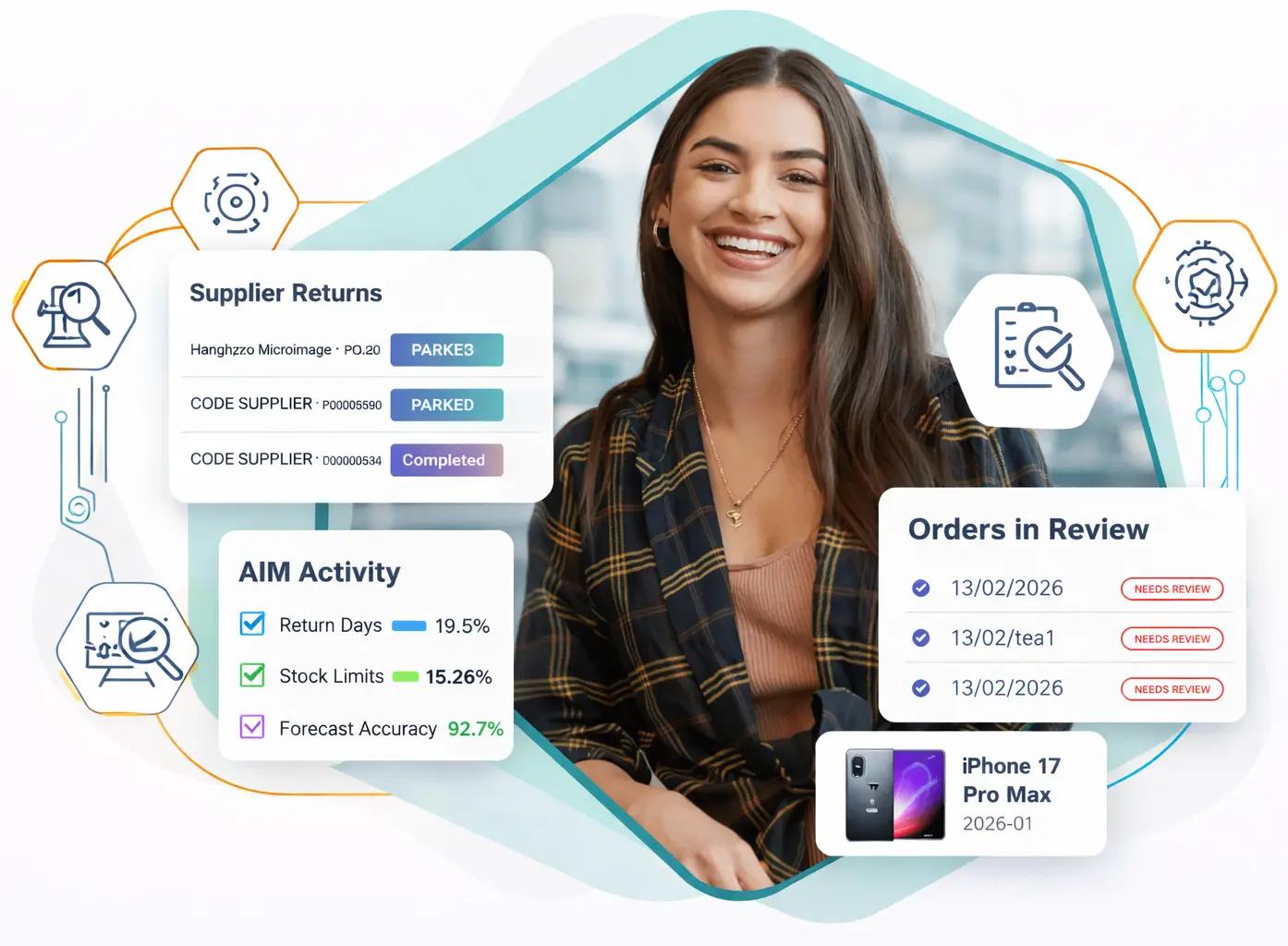
Ordering too much inventory can tie up working capital, while ordering too little can create stockouts. An advanced system can use reorder points, minimum and maximum levels, lead times, and demand information to support more disciplined replenishment.
This allows purchasing teams to identify products that require attention before they become operational problems.
Inventory Reporting and Analytics
Good inventory control depends on measurable performance. Useful KPIs include:
Inventory turnover
Stockout rate
Inventory accuracy
Days of inventory on hand
Carrying cost
Order fulfillment or fill rate
Slow-moving and non-moving stock
Forecast accuracy
These measurements help businesses identify where inventory is performing well and where improvements are needed.
Reduce Overstock Without Creating Stockouts
One of the biggest inventory challenges is finding the right balance. Excess stock consumes warehouse space and working capital, while insufficient stock can interrupt production or result in missed sales.
An Advanced Inventory Manager can help businesses analyse historical movement, current quantities, reorder levels, and demand patterns to support better stock decisions. Inventory optimization is specifically aimed at reducing unnecessary holding costs while lowering the risk of stockouts.
For example, instead of automatically ordering the same quantity every month, a business can review which products are fast-moving, which are slowing down, and which have remained inactive. This creates a more flexible approach to purchasing.
Improve Warehouse Accuracy and Efficiency
Warehouse teams need reliable inventory information to receive, store, pick, transfer, and dispatch products correctly. When system records do not match physical stock, employees spend valuable time searching for discrepancies.
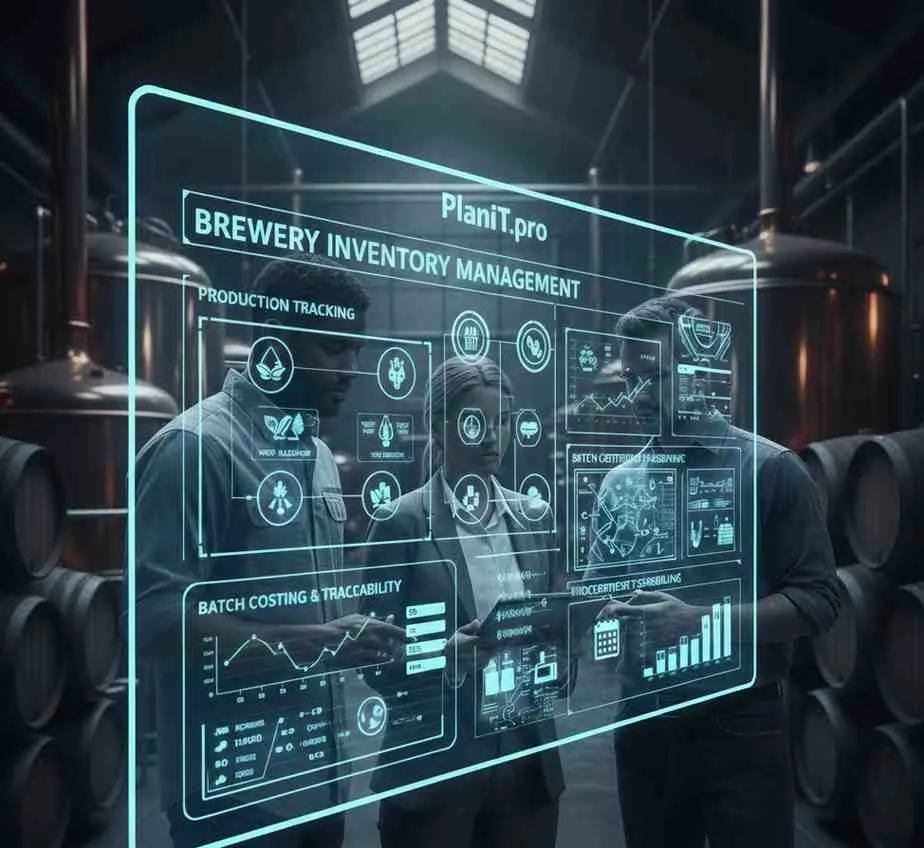
Digital inventory management can support structured processes for receipts, issues, transfers, adjustments, barcode scanning, and stock counts. Better documentation also creates greater traceability for inventory movements.
For growing businesses, this can reduce dependence on individual employees' memory and make inventory processes more consistent across teams.
Turn Inventory Data into Better Decisions
Inventory data becomes more valuable when it can be converted into actionable information. Instead of looking at isolated stock numbers, management can examine trends and relationships.
For instance, a report may reveal that:
A high-value product is moving slower than expected.
A popular SKU frequently reaches its reorder level.
One warehouse has excess stock while another has shortages.
Certain products are tying up working capital.
Purchasing patterns do not match actual demand.
These insights can help management improve purchasing, warehouse planning, sales coordination, and cash-flow decisions. Effective inventory management can support cost control, efficiency, customer service, and better use of working capital.
Why Businesses Are Moving Toward Smarter Inventory Management
Inventory is closely connected with almost every operational function. Purchasing needs accurate stock information before placing orders. Sales teams need to know product availability. Production needs materials at the right time. Warehouse teams need precise movement records. Finance needs dependable inventory valuation and reporting.
An advanced inventory platform helps bring these activities closer together, creating a more informed operational environment.
The result is not simply "more software." It is a more structured way of managing stock, reducing avoidable manual work, and supporting decisions with current information.
Power Up Your Stock Control with PlanIT
Growing businesses need inventory control that can grow with them. PlanIT provides inventory management capabilities designed to help businesses gain better visibility, improve stock planning, manage inventory movements, and make informed operational decisions.
Whether you manage retail products, wholesale inventory, manufacturing materials, or multiple storage locations, the right Advanced Inventory Manager can help transform stock control from a reactive task into a strategic business process.
If your current inventory process involves too many spreadsheets, manual updates, or uncertainty about available stock, it may be time to upgrade your approach with PlanIT.
Contact PlanIT:
Mobile: +91-9958474631
Email: sales@plan-it.pro
With better visibility, smarter replenishment, and meaningful inventory reporting, businesses can take greater control of their stock and build a stronger foundation for sustainable growth.
Note: The article is written as original copy with a low-plagiarism objective; however, no tool can guarantee a specific plagiarism percentage because results vary by checker and database.


Write a comment ...